
21 min read
Cold Call Openers That Work: 21 Examples for B2B Sales
Cold call openers work best when they establish relevance quickly, lower resistance, and give the prospect a reason to stay on the line. In B2B sales, the best opening lines are short, specific, and matched to the buyer’s role, timing, and likely priorities.
In this blog, we share 21 cold call openers for SDRs, AEs, and sales teams, explain why they work, and show how to use them more effectively in modern outbound workflows. We also cover the operational factors that influence cold call performance, including data quality, caller ID health, delivery speed, and rep readiness.
What is a cold call opener?
A cold call opener is the first line a sales rep uses to start a conversation with a prospect. The best cold call openers quickly establish relevance, reduce friction, and give the buyer a reason to continue the conversation.
What Makes a Good Cold Call Opener?
A good cold call opener does three things in the first few seconds:
-
Shows relevance by connecting to the prospect’s role, company, or likely challenge
-
Reduces friction by sounding clear, human, and respectful of time
-
Creates a reason to continue by prompting curiosity, recognition, or a simple response
No opener works in every situation. Performance depends on targeting, timing, list quality, rep delivery, and the prospect’s familiarity with your brand. But a strong opener can improve the odds of turning a pickup into a real conversation.
Why Cold Call Openers Still Matter in B2B Sales
Outbound sales have changed. Buyers are harder to reach, inboxes are crowded, and attention is fragmented across devices and channels. That puts more weight on the first few seconds of every live call.
Based on Koncert’s internal analysis of more than 20 million sales calls, mobile numbers generated stronger connection rates than office or direct lines in many outbound scenarios. The same analysis also found that C-level buyers can be reachable when the timing, data, and messaging are right. For teams trying to improve live conversations at scale, an AI-powered dialer can make that process more efficient.
That does not mean every team should use the same script. It means the opener needs to be paired with the right multi-channel sales outreach, accurate contact data, and a calling workflow built for speed and consistency, such as an AI Parallel Dialer.
About the data in this article
This article includes observations informed by Koncert’s internal review of more than 20 million sales calls. The findings reflect aggregate trends across B2B outbound calling activity and should be interpreted as directional rather than universal. Results can vary based on industry, persona, geography, list quality, caller ID reputation, rep skill, and outreach timing.
21 Cold Call Openers That Work
-
Permission-based cold call openers
-
Pattern-interrupt cold call openers
-
Problem-centric cold call openers
-
Referral and network-based cold call openers
-
Anti-sales cold call openers
Best Cold Call Openers by Sales Scenario
The best cold call opener depends on the context you have before the call. A strong opening line should match the buyer, the situation, and the reason for the outreach.
When you have little or no prior context
Use a **permission-based opener**. These work well when you want to sound respectful, direct, and low-pressure.
When the prospect likely gets frequent outbound calls
Use a **pattern-interrupt opener**. These help break the usual sales-call rhythm and create curiosity early.
When you have a clear trigger event
Use a **problem-centric opener**. These are effective when you can connect your outreach to hiring, funding, expansion, leadership changes, or another visible business event.
When you have account context or internal familiarity
Use a referral or network-based opener. These are helpful in account-based outreach, expansion motions, and multi-threaded selling.
When the buyer is skeptical or highly analytical
Use an **anti-sales opener**. These work best when the goal is to lower resistance and start a more exploratory conversation.
A useful rule is simple: the less context you have, the more you should rely on clarity and respect. The more context you have, the more specific your opener can be.
Permission-Based Cold Call Openers
Best for: C-suite contacts, senior decision-makers, time-sensitive buyers
Why they works: They acknowledge the interruption and give the prospect a sense of control
1. The brutally honest opener
Script: “Hi [Name], this is [Your Name]. I’ll be direct — this is a cold call. If now’s a bad time, I can be brief and tell you why I reached out.”
Why this works:** This opener uses transparency instead of trying to mask the nature of the call. That often helps lower resistance, especially with experienced buyers.
Use it when: You’re calling senior leaders who value clarity and directness.
2. The 30-second opener
Script: “Hi [Name], I know I’m interrupting your day. If I take 30 seconds to explain why I called, you can decide if it’s worth continuing. Is that fair?”
Why this works: It creates a low-pressure agreement and makes the time commitment feel manageable.
Use it when: You want a simple, respectful opener that works across many personas.
3. The right-person opener
Script: “Hi [Name], I’m reaching out because of your role, but I may have the wrong person. Can I give you a quick reason for the call, and you can tell me if I’m in the right place?”
Why this works: It lowers defensiveness and invites the prospect to help orient the conversation.
Use it when: You’re calling into larger organizations or navigating unfamiliar org charts.
4. The precise-time opener
Script: “Hi [Name], calling you out of the blue here. I’ll keep this very short — can I take 27 seconds to explain why I called?”
Why this works: A precise number feels more intentional than a vague “quick minute.”
Use it when: You want to sound prepared and disciplined without overexplaining.
Pattern-Interrupt Cold Call Openers
Best for: Prospects who likely receive frequent outbound calls
Why they works: They break the expected sales-call rhythm and create curiosity
5. The shared-reality opener
Script:“Hi [Name], I’m guessing cold calls are not at the top of your favorite-things list, so I’ll keep this simple.”
Why this works: It shows awareness of the buyer’s perspective and resets the tone.
Use it when: You want to sound human and reduce formality early.
6. The research-led opener
Script: “ Hi [Name], I saw your post about [topic] and it raised a question I couldn’t answer from your site, so I decided to call.”
Why this works: It signals preparation and creates natural curiosity.
Use it when: You have a credible trigger from LinkedIn, a blog post, event appearance, or company news.
7. The competitor-context opener
Script: “Hi [Name], I noticed your team appears to be using [competitor]. A lot of teams I speak with like them for [strength] but run into issues with [pain point]. Has that come up for you at all?”
Why this works: It validates the prospect’s current decision while opening space for a practical discussion.
Use it when: You have high confidence in your competitive intelligence.
8. The authority-check opener
Script: “Hi [Name], I’m trying to reach the person responsible for improving [KPI] at [Company]. Did I find the right person?”
Why this works: It makes the response easy and quickly confirms ownership.
Use it when: You want to qualify the contact without sounding vague.
Problem-Centric Cold Call Openers
Best for: Buyers with visible triggers, known pain points, or operational pressure
Why they works: They get to the business issue quickly
9. The contextual observation opener
Script: “Hi [Name], I saw that [Company] recently announced [funding/news/hiring push]. In a lot of cases, that creates pressure around [problem]. Has that started to show up for your team?”
Why this works: It connects the conversation to a real business event instead of a generic pitch.
Use it when: You have a timely, relevant trigger event.
10. The peer-problem opener
Script: “Hi [Name], I’ve been speaking with a few [role] leaders in [industry], and many are trying to solve [pain point]. Is that something your team is dealing with too?”
Why this works: It uses peer context without overclaiming.
Use it when: You know the issue is common in that segment or vertical.
11. The seasonal-pressure opener
Script:“Hi [Name], at this point in the quarter, many [role] teams are focused on [seasonal issue]. I had an idea I thought might be relevant — can I share it briefly?”
Why this works: It shows timing awareness and creates a natural bridge into the conversation.
Use it when: There’s a clear quarterly, annual, or industry-specific cycle.
12. The efficiency opener
Script: “Hi [Name], I’m reaching out because teams like yours often discover hidden inefficiencies around [process]. I wanted to see whether that’s on your radar right now.”
Why this works: It frames the discussion around operational improvement, which tends to be relevant across functions.
Use it when: You want to avoid overly aggressive claims while still surfacing business pain.
13. The metric-based proof opener
Script: “Hi [Name], we recently worked with a company similar to [Company] and helped improve [metric] in [timeframe]. I’m not sure if the same approach would fit your team, but I thought it was worth a conversation.”
Why this works: It uses proof while avoiding overconfidence.
Use it when: You have a defensible customer outcome or case-study-style result.
14. The magic-wand opener
Script: “Hi [Name], if you could fix one thing about your team’s [process] this quarter, what would it be?”
Why this works: It gets the buyer talking about priorities immediately.
Use it when: You’re speaking with someone likely to own process, performance, or revenue outcomes.
Referral Network-Based Cold Call Openers
Best for: Account-based selling, multi-threading, expansion plays
Why they work: They build credibility through context and familiarity
15. The top-down opener
Script: “Hi [Name], I was recently pointed toward your team regarding [project or priority], and I wanted to reach out directly.”
Why this works: It creates contextual legitimacy without overstating the relationship.
Use it when: You’ve been referred internally or have a credible path into the account.
16. The colleague-context opener
Script: “Hi [Name], I noticed you work closely with [colleague/team]. I thought you might be the best person to ask about [topic].”
Why this works: It shows account research and respect for how the organization is structured.
Use it when: You’re mapping stakeholders in complex buying groups.
17. The content-engagement opener
Script: “Hi [Name], I came across your company’s content on [topic] and found your perspective on [subtopic] interesting. I had a related question I thought was worth asking directly.”
Why this works: It turns content engagement into a natural conversation starter.
Use it when: The company publishes credible thought leadership or event content.
18. The event follow-up opener
Script: “Hi [Name], I saw your team was involved in [event or webinar]. I was curious what stood out most to you from it.”
Why this works: It opens with reflection rather than a product pitch.
Use it when: You have event attendance, sponsorship, or follow-up context.
Anti-Sales Cold Call Openers
Best for: Highly skeptical or technical buyers
Why they work: They lower the buyer’s guard by shifting the frame away from a standard pitch
19. The qualification opener
Script: “Hi [Name], I’m not calling to push anything today. I wanted to see whether your team might be a fit for a program we’re evaluating with [industry] organizations.”
Why this works: It changes the dynamic from persuasion to fit.
Use it when: You’re inviting feedback, discussing a pilot, or opening a consultative conversation.
20. The feedback opener
Script: “Hi [Name], we’ve been speaking with experienced [role] leaders to better understand how teams handle [problem]. Could I ask you one quick question?”
Why this works:** People are often more willing to share expertise than hear a pitch.
Use it when: You’re engaging technical or process-oriented buyers.
21. The department-check opener
Script: “Hi, I’m trying to find the person who owns [pain point or initiative] at [Company]. Could you point me in the right direction?”
Why this works: It’s simple, low-friction, and often opens the door to qualification.
Use it when: You’re calling into switchboards, departments, or less clearly mapped accounts.
How to Choose the Right Cold Call Opener
The best cold call opener depends on what you know before the call.
Use a permission-based opener when:
-
You’re calling senior executives
-
You have limited context
-
You want a respectful, low-friction opening
Use a pattern-interrupt opener when:
-
The prospect likely receives frequent outbound calls
-
You have a strong personalization angle
-
You need to differentiate quickly
Use a problem-centric opener when:
-
You have a credible trigger
-
The pain point is likely urgent or measurable
-
You can speak clearly to business impact
Use an anti-sales opener when:
-
The buyer is skeptical of standard pitches
-
You need to lead with curiosity or research
-
The conversation is more exploratory than transactional
Use a referral or network-based opener when:
-
You’re running account-based outreach
-
You have internal context from the account
-
You’re multi-threading across stakeholders
Best Cold Call Openers by Persona
Different buyers respond to different types of opening lines. The more closely the opener matches the buyer’s priorities, the better the conversation tends to start.
Cold call openers for CEOs and founders
Senior executives usually respond better to openers that are brief, direct, and clearly relevant. A permission-based opener often works well because it respects time and avoids unnecessary buildup.
Cold call openers for sales leaders
Sales leaders tend to respond to openers tied to pipeline, conversion, rep productivity, or connect rates. Problem-centric and metric-based openers can be effective when the business impact is clear.
Cold call openers for RevOps leaders
Revenue operations buyers often care about process efficiency, data quality, workflow consistency, and reporting accuracy. Openers that reference operational inefficiencies or measurable performance gaps can be more effective than generic pitches.
Cold call openers for marketing leaders
Marketing leaders are often focused on pipeline contribution, lead quality, attribution, and campaign efficiency. Openers that connect outreach to growth goals or funnel performance can create more relevance.
Cold call openers for technical or analytical buyers
Technical buyers often respond better when the opener is calm, specific, and grounded in a real problem. Anti-sales or research-led openers can work well because they reduce pressure and invite a more thoughtful exchange.
The more clearly a rep understands the buyer’s role, the easier it becomes to choose an opener that feels relevant instead of generic.
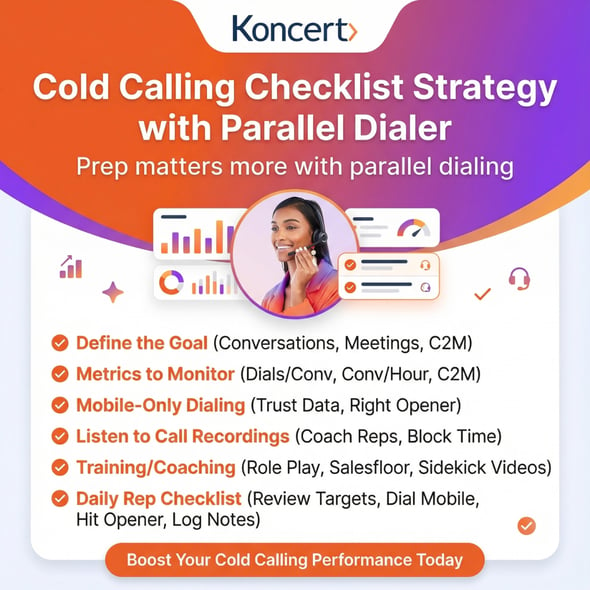
Personalization Checklist for Cold Call Openers
Before using any opener, make sure you can answer at least two of these questions:
-
What does this person likely care about in their role?
-
What recent company event or trigger can I reference?
-
What business problems are common for similar teams?
-
What metrics, initiative, or workflow might matter to them?
-
Why is now a reasonable time to reach out?
If you can’t answer those questions, the issue may not be the script. It may be the target.
How to Personalize Cold Call Openers at Scale
Personalization does not need to mean writing every opener from scratch. The goal is to build a repeatable system that helps reps sound specific without slowing execution or losing relevance across channels. For many teams, that means learning how to personalize outreach at scale with better data, better timing, and better execution.
For most teams, personalization at scale depends on five inputs:
Role-based context
Start with what the buyer likely cares about in their role. A sales leader, RevOps manager, and CRO may all care about revenue, but they usually think about different parts of the problem.
Trigger-based context
Use recent events to make the opener more timely. Hiring activity, funding, product launches, territory expansion, leadership changes, and new initiatives can all create stronger context.
Account-based context
When possible, reference the company’s market, operating model, or likely priorities. The more specific the account understanding, the easier it is to avoid generic messaging.
Accurate contact data
Personalization breaks down when the rep is working from outdated role information or incorrect contact details. Better data improves targeting and gives the opener more credibility. That is where Waterfall Data Enrichment can support stronger outbound execution.
Rep readiness
Even a well-written opener can fail if the rep is not prepared to adapt naturally. Teams usually get better results when reps practice delivery, objection handling, and transitions after the opening line. Tools like AI PitchLab can help reps build that readiness before live conversation
The strongest teams do not treat personalization as a writing exercise alone. They treat it as a combination of data quality, account context, and rep execution.
Cold Calling Mistakes to Avoid When Using Openers
Even strong openers can fall flat when the delivery or context is off. Here are common mistakes to avoid.
Sounding overly rehearsed
A script should support the conversation, not replace it.
Leading with your company instead of relevance
Prospects care first about whether the call matters to them.
Using personalization that feels generic
Surface-level references do not build trust. Specificity does.
Making unsupported claims
Strong messaging is useful, but claims should be grounded in real outcomes, case studies, or observed patterns.
Ignoring the operational side of outreach
Good openers still depend on data quality, caller ID health, timing, and rep readiness.
Cold Call Openers to Avoid
Some cold call openers create friction before the conversation has a chance to begin. In many cases, the issue is not that the rep opened the call confidently. The issue is that the opener sounded generic, self-focused, or overly scripted.
Here are a few opener patterns to avoid.
The long company introduction
If the first sentence is mostly about your company, the prospect may disengage before they understand why the call matters to them.
The vague personalization opener
References like “I saw your company is doing great things” usually sound superficial. Specificity builds credibility. Generic flattery usually does not.
The overly aggressive opener
Strong outreach does not require high pressure. If the opener pushes too quickly toward a meeting, demo, or hard commitment, it can increase resistance.
The unsupported proof opener
Claims about performance, ROI, or customer results should be grounded in real outcomes. If the proof sounds exaggerated or unclear, trust drops quickly.
The scripted-sounding opener
A structured opener is useful. A robotic opener is not. The goal is to sound prepared, not rehearsed.
In most cases, the best opener is not the cleverest one. It is the one that sounds relevant, credible, and easy to respond to.
Why Delivery Matters as Much as the Cold Call Opener
The words matter, but so does what happens.
A rep can use a strong opener and still lose the moment if the call connects slowly; the contact data is outdated, or the rep is not prepared to respond naturally. Modern outbound performance depends on more than scripts alone.
For many teams, that means improving execution in four areas.
Better contact data
Accurate roles, numbers, and account contexts make personalization more credible. Koncert’s Waterfall Data Enrichment helps teams replace missing or inaccurate contact details with real-time verified data.
Faster call connection
A delayed handoff can make the start of a call feel awkward and reduce trust. Koncert’s calling experience is built around ultra-low latency to help reps engage live prospects with less delay. Teams using an AI Parallel Dialer can reduce friction at the moment of connection.
Healthier caller ID performance
Answer rates depend in part on whether your caller IDs remain effective over time. Koncert’s Automated Caller ID Health and Heat Map capabilities help teams manage caller ID usage more responsibly and maintain stronger pickup performance.
Better rep preparation
The best opener is often the one the rep can deliver naturally. Koncert’s AI PitchLab gives teams a way to practice talk tracks, refine tone, and prepare objections in a realistic environment.
How To Test Cold Call Openers
If you want to improve opener performance, test them systematically. The strongest teams do this within a broader sales cadence or multi-touch outreach framework so opener performance is measured in real context, not in isolation.
Track these metrics
-
Connect rate
-
Conversation rate
-
Meeting-booked rate
-
Positive response rate
-
Call duration after opener
-
Objection rate by opener type
Test by
-
Persona
-
Industry
-
Company size
-
Trigger type
-
Rep
-
Time of day
Keep the test clean
-
Use the same offer
-
Keep the audience similar
-
Change one variable at a time
-
Review call recordings for delivery quality, not just outcomes
How Sales Teams Can Train Reps on Cold Call Openers
Testing openers helps teams understand what performs best. Training helps reps deliver those openers with consistency. A structured AI sales training approach can make that process more repeatable.
For most sales teams, opener coaching should focus on four areas:
Delivery
A strong opener should sound natural, calm, and clear. Reps should avoid rushing through the first line or sounding overly rehearsed.
Transitions
The opener matters, but what comes next matters too. Reps need to know how to move from the opening line into a relevant conversation without losing momentum.
Objection handling
Many calls do not fail because the opener was poor. They fail because the rep is not ready for the first objection. Teams should practice responses to common reactions such as “I’m busy,” “send me an email,” or “we already have a provider.”
Coaching with examples
Call reviews are most useful when managers can compare opener performance across personas, scenarios, and reps. Reviewing live conversations helps teams improve both the script and the delivery.
The best training environments help reps improve before live conversations are at stake. That is especially valuable when teams want to scale quality, onboard new reps faster, and create more consistency across outbound efforts.
Frequently Asked Questions
What is the best cold call opener?
The best cold call opener is one that quickly establishes relevance and gives the prospect a reason to stay in the conversation. In B2B sales, permission-based and problem-centric openers often work well because they combine clarity with low friction.
Do cold call scripts still work in B2B sales?
Yes, but the best scripts are flexible. A strong cold call script gives reps structure while still leaving room for natural delivery, personalization, and follow-up questions.
How long should a cold call opener be?
Most effective cold call openers are short. The goal is not to explain everything up front, but to earn enough attention to continue the conversation.
Should SDRs personalize every cold call opener?
Yes, when possible. Even light personalization tied to role, trigger, or business context tends to perform better than generic intros.
Are AI-generated cold call openers useful?
They can be. AI can help teams generate variants, identify patterns, and speed up preparation, but human review is still important for tone, accuracy, and relevance.
Why do some cold call openers fail even when the script is strong?
Because the script is only one part of the performance. Results also depend on timing, targeting, contact data accuracy, caller ID health, and how naturally the rep delivers to the opener.
Final Takeaway
A strong cold call opener does not need to be clever for the sake of being clever. It needs to be relevant, respectful, and easy to respond to.
The best sales teams treat openers as part of a broader outbound system. They combine strong messaging with accurate data, healthy caller IDs, fast call connection, coaching, and consistent testing. That’s what turns more pickups into conversations and more conversations into pipelines.
If your team is looking to improve live connect quality and make outbound more effective at scale, Koncert helps bring those pieces together with AI-powered dialing, real-time data enrichment, caller ID health management, and sales rep coaching tools designed for modern B2B sales teams.