
11 min read
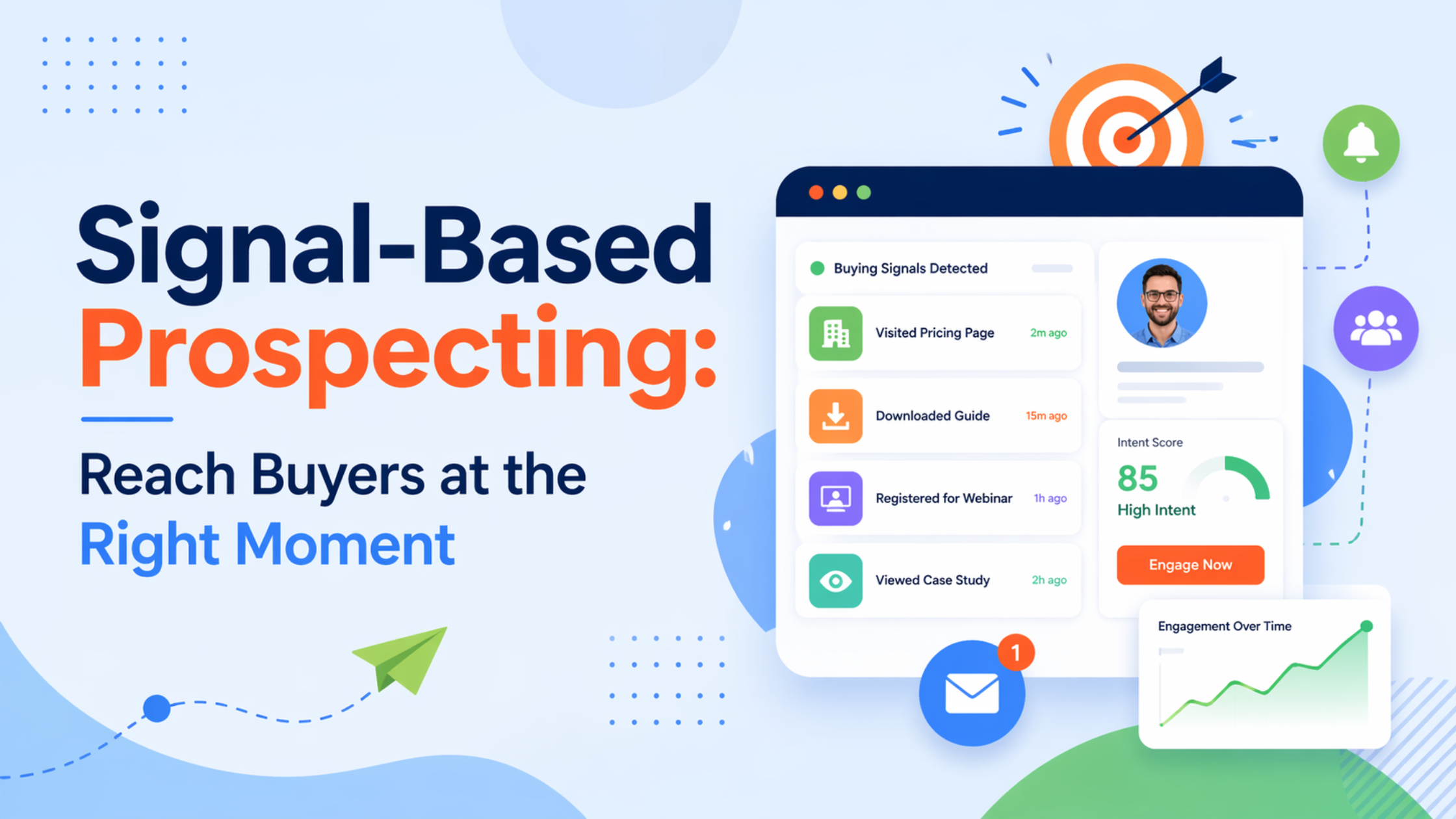
Signal-Based Prospecting: How to Reach Buyers at the Right Moment and Close More Deals
Most outbound teams do not have a messaging problem. They have a timing problem.
A well-written email or thoughtful call can still go unanswered if the buyer is not actively evaluating change. In many cases, the issue is not what was said, but when the message arrived.
Signal-based prospecting helps sales teams act on buyer timing instead of internal schedules. By using real buyer activity, such as leadership changes, hiring, funding, website engagement, and intent data, teams can prioritize accounts when outreach is more likely to feel relevant and useful.
That shift helps reps focus on accounts that are more likely to engage, reduces wasted outreach, and creates more opportunities to start conversations while buyer interest is still active.
In this guide, we’ll cover what signal-based prospecting is, why timing matters in B2B sales, which buying signals are worth tracking, and how to build a repeatable process that improves pipeline quality.
What Is Signal-Based Prospecting?
Signal-based prospecting is a B2B sales approach that uses real buyer activity to decide when and how outreach should happen. Instead of treating every qualified account the same, sales teams look for signals that suggest a meaningful shift in buying readiness.
Those signals can include funding events, leadership changes, hiring activity, website engagement, technology adoption, intent data, and regulatory developments. When those signals appear, outreach can be prioritized based on real-world context rather than internal schedules.
Traditional prospecting often starts with firmographic filters such as industry, company size, geography, and revenue. Those filters help identify good-fit accounts, but they do not indicate whether a buyer is actively exploring change right now.
Signal-based prospecting adds that missing layer. It helps teams improve timing, prioritize active accounts, and create more relevant conversations.
At its best, signal-based prospecting is not about sending more messages. It is about reaching the right buyer with the right context at the right time.
Why Timing Is Critical in B2B Sales
Timing plays a major role in whether outbound outreach feels helpful or interruptive.
In B2B sales, buyers often research independently before speaking with vendors. By the time they respond to outreach, they may already be comparing options, building a shortlist, or aligning internally on requirements. If a message arrives too early, it may be ignored. If it arrives too late, the conversation may begin after key decisions are already taking shape.
Signal-based prospecting helps teams engage during that window of active evaluation.
When outreach aligns with a clear trigger, it becomes easier to frame the message around a current business priority. That could be a new executive hire, a funding round, a spike in interest around a product category, or increased activity on a pricing page. Instead of sending a generic note, reps can speak to something the buyer is already thinking about.
That improves more than reply rates. It also improves conversation quality. Buyers are more likely to engage when outreach reflects their current reality rather than a generic sequence written weeks earlier.
Traditional Prospecting vs. Signal-Based Prospecting
Traditional prospecting and signal-based prospecting differ in one important way: how they treat timing.
Traditional prospecting is usually list-based. Teams define an ideal customer profile, build contact lists, and enroll those contacts into a standard cadence. The process is organized and scalable, but it often assumes that every qualified account is equally ready for outreach.
Signal-based prospecting starts with the same ideal customer profile, then prioritizes accounts based on fresh signals that suggest active interest or changing business conditions.
Traditional prospecting usually looks like this
-
Static target lists
-
Fixed outreach sequences
-
Broad personalization by segment
-
Success measured by volume metrics
-
Limited visibility into buyer timing
Signal-based prospecting usually looks like this
-
Dynamic account prioritization
-
Outreach triggered by buyer activity
-
Personalization based on real context
-
Faster follow-up windows
-
Performance measured by engagement, meetings, and conversion by signal type
The advantage of signal-based prospecting is not just efficiency. It is better timing, stronger relevance, and a greater chance of joining the conversation before competitors do.
Which Buying Signals Should Sales Teams Track?
Not every signal deserves immediate action. The goal is to focus on signals that indicate real momentum, urgency, or change.
Funding and Financial Events
When a company raises capital, expands budgets, or announces aggressive growth plans, it often creates a window for operational investment. These events can signal that teams are reviewing tools, hiring aggressively, or upgrading systems to support growth.
Leadership and Hiring Changes
New executives often reassess strategy, vendors, and team priorities within their first few months. Job openings can also reveal upcoming initiatives. If a company is hiring for revenue operations, sales leadership, compliance, or demand generation, there may already be a project in motion behind the scenes.
Website Engagement
Website activity can reveal strong intent, especially when a target account returns to pricing, product, integration, or case study pages. Repeated visits often indicate deeper evaluation rather than casual browsing.
Technology Adoption and Tech Stack Changes
A new CRM, sales engagement platform, analytics tool, or data platform can create follow-on needs. Technology changes often open the door to conversations about integrations, workflow design, data enrichment, and sales productivity.
Intent Data and Search Behavior
Third-party intent data can help teams identify which accounts are researching a category, problem, or competitor. This becomes even more useful when paired with ICP fit and first-party activity.
Regulatory or Compliance Changes
In some industries, regulatory shifts create immediate operational needs. When deadlines or new requirements emerge, buyers often move quickly to evaluate tools and processes that support compliance.
How to Build a Signal-Based Prospecting Process
A strong signal-based prospecting strategy needs structure. Without a clear process, teams can collect alerts without turning them into better outreach.
1. Define Your Ideal Customer Profile
Start with focus.
Signal tracking works best when teams monitor accounts that already match the ideal customer profile. Define best-fit segments by industry, company size, geography, business model, and relevant technology environment.
The narrower and more accurate the ICP, the easier it becomes to filter signal noise and prioritize the right accounts.
2. Choose Reliable Signal Sources
Once the ICP is clear, identify the sources that can help detect meaningful buyer activity. These might include:
-
Funding databases
-
LinkedIn and hiring data
-
Website tracking tools
-
Intent data platforms
-
Sales intelligence tools
-
Industry publications and regulatory updates
The best setup routes signal data into existing workflows, so reps do not have to check multiple disconnected systems.
3. Score and Prioritize Signals
Not every signal should trigger the same response.
Build a simple scoring model based on signal strength, ICP fit, and urgency. For example, a funding event combined with pricing page visits may deserve faster action than a single broad keyword spike. Scoring helps teams focus on the accounts most likely to convert and prevents reps from chasing low-value alerts.
This is especially important when teams want to separate genuine buying momentum from background noise.
4. Build Signal-Specific Outreach
One of the biggest mistakes in modern outbound is using good timing with generic messaging.
If a signal triggered the outreach, the message should reflect that trigger. A leadership-change email should sound different from a website-engagement email. A funding-based call opener should sound different from a compliance-based follow-up.
The goal is not to sound automated. It is to sound informed.
That matters because personalization works best when it is grounded in a real trigger and active buyer context.
5. Measure and Optimize
Once the process is live, track the metrics that show whether the approach is working.
Useful metrics include:
-
Time to first touch after a signal appears
-
Signal-to-meeting conversion rate
-
Conversion by signal type
-
Opportunity creation by source
-
Revenue influenced by signal-based outreach
Review performance regularly and adjust scoring, messaging, and sources over time. Strong teams treat signal-based prospecting as an ongoing system, not a one-time campaign.
Best Practices for More Human, More Effective Outreach
Signal-based prospecting only works when the outreach feels relevant and human.
Here are a few principles that matter:
-
Lead with context: Reference the trigger naturally. Show that outreach is grounded in a real business event, not a recycled template.
-
Keep the message focused: Do not try to explain everything in the first touch. Connect the signal to one clear problem or opportunity and offer a simple next step.
-
Match the channel to the moment: Some signals are better suited to email, while others justify a faster call or multi-channel follow-up. The right approach depends on urgency, buyer role, and account context.
-
Move quickly, but do not rush the message: Teams often see better results when they respond quickly after a strong signal appears. But speed should not come at the expense of relevance.
-
Track negative signals too: Not every signal means "reach out now." Layoffs, budget freezes, or a recent long-term commitment to a competing platform may be reasons to pause outreach rather than accelerate it.
How Koncert Supports Signal-Based Prospecting
Signal-based prospecting only works when teams can act quickly on the right accounts without losing relevance. Detecting a trigger is only the first step. Teams still need accurate data, fast outreach, healthy caller IDs, and a workflow that helps reps turn timing into real conversations.
Koncert supports that execution in several ways:
Koncert is an AI-powered sales engagement platform built to help B2B sales teams connect faster, work more efficiently, and improve outbound performance. For teams running a signal-based motion, that matters in several ways.
-
Faster action after a signal appears: Koncert’s AI Parallel Dialer helps teams connect with more live prospects quickly through ultra-low latency dialing
-
More flexible outreach by role and workflow: Teams can use AI Parallel Dialer for higher-volume outbound motions and AI Power/Flow Dialer for more structured single-line follow-up workflows.
-
Cleaner data before the first touch: Signal-based outreach depends on accurate contact data. Koncert’s data enrichment capabilities help teams improve contact coverage and reduce wasted outreach effort.
-
Stronger pickup performance over time: Koncert’s caller ID health capabilities help teams manage caller reputation and improve answer rates with local presence and Heat Map monitoring.
-
Better rep execution: Tools such as Remote Coach and AI PitchLab support rep readiness, coaching, and more consistent live-call performance.
Additional capabilities that support signal-based motions
-
ZigZag Dialing® logic prevents simultaneous ringing across multiple lines for the same prospect, preserving professional interaction standards
-
Parking Lot quarantines disconnected lines and invalid numbers so reps focus energy on legitimate prospects
-
Waterfall Data Enrichment fills missing contact details automatically from multiple premium sources
-
AI PitchLab lets reps rehearse pitches in a risk-free environment before live calls
-
SOC 2 Type II certification and TCPA/GDPR compliance features support regulated industries
Frequently Asked Questions
What is signal-based prospecting?
Signal-based prospecting is a sales approach that uses buyer activity and business triggers to determine when outreach is most likely to be relevant. Instead of contacting every target account on a fixed schedule, teams prioritize accounts based on signals such as funding, hiring, website engagement, or intent activity.
Why is timing important in B2B prospecting?
Timing matters because buyers often research independently before talking to vendors. If outreach arrives during active evaluation, it is more likely to feel relevant and start a real conversation.
What are examples of buying signals?
Common buying signals include funding rounds, leadership changes, hiring trends, pricing-page visits, technology adoption, intent data spikes, and regulatory changes.
How many signals should a team track?
Most teams should start with a small set of high-confidence signals rather than trying to track everything at once. A focused list is easier to manage, easier to score, and more likely to produce actionable outreach
How fast should reps follow up after a signal?
The right timeline depends on the signal, but strong teams usually follow up quickly when the signal reflects active buying intent because signal value declines over time.
How can sales teams avoid sounding automated?
Use the trigger as context, not as a script. Reference the signal naturally, connect it to a likely business priority, and keep the message concise and specific. The goal is to sound informed, not templated
Conclusion
Signal-based prospecting gives sales teams a more intelligent way to do outbound.
Instead of relying only on static lists and fixed cadences, teams can use real buyer activity to prioritize outreach, improve timing, and create more relevant conversations. That leads to better use of rep time, stronger account prioritization, and higher-quality pipeline.
For teams building a more precise outbound motion, the key is not just finding signals. It is building the workflows, scoring, messaging, and follow-up discipline needed to act on them consistently
When speed, personalization, and execution matter most, the right platform can make that process easier. Koncert helps teams move from signal detection to live conversations with faster dialing, cleaner data, caller ID health management, and rep coaching support
Start reaching buyers at the exact moment they prepare to evaluate solutions. Load clean data into Koncert today. Begin the first signal-based outreach session this week. Watch engagement rise. Book more meetings. Close more revenue. Begin now.