
9 min read
iOS 26 Call Screening: Why Dial-to-Conversation Matters More Than Ever
When Apple revealed an enhanced call screening feature in iOS 26, the sales industry reacted with immediate concern. Predictions claimed connect rates would collapse and SDR teams would need to abandon cold calling entirely.
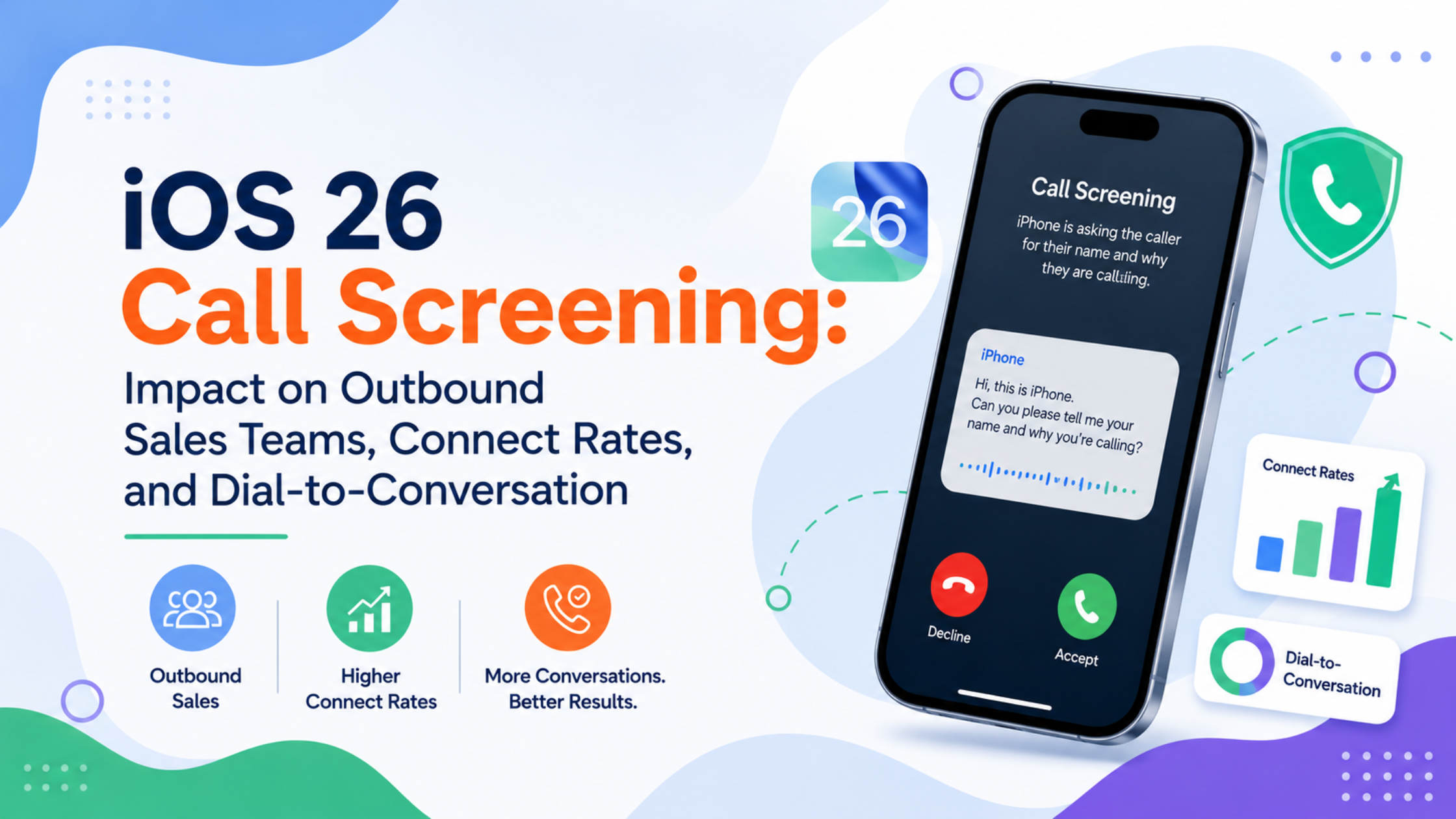
The actual developer documentation and testing show a different reality. iOS 26 Call Screening is an opt-in toggle located in Settings followed by Phone. Apple ships it turned off by default. When a user enables it, the iPhone auto-answers unknown calls, asks the caller for a brief reason for calling, transcribes that response, and then rings the handset. This gives the prospect a chance to read the context before deciding whether to answer.
Most iPhone users will never turn this feature on. People rely on their phones for critical communication from schools, doctors, and clients. The fear of missing an important call keeps adoption low. Furthermore, the people most likely to enable it are the same people who already ignore unknown numbers and send everything to voicemail.
For quality B2B outreach, this feature can actually improve your results. By suppressing high-volume B2C spam, a professional sales rep doing B2B with a message that clearly explains its purpose in the screening prompt stands out. A prospect who usually ignores unknown numbers might choose to answer when the transcript displays a highly relevant business reason.
The Metric That Matters More Than Any Feature Update
This update highlights a critical flaw in how most outbound teams measure performance. The dominant metric has always been raw call volume. Managers review dial counts, and CRMs track dial activity. The problem with measuring dials is that it measures effort, not outcome.
A dial that hits a disconnected number looks identical in the activity log to a dial that becomes a four-minute qualifying conversation. Both register as one dial. They hold completely different value.
The metric that actually predicts pipeline is the Dial-to-Conversation rate, or D2C. This is the percentage of dials that result in a substantive, two-way exchange with the intended prospect. This is distinct from raw connect rate, which counts any answered call, including those that end in a rejection within five seconds. D2C filters for the conversations that matter.
To calculate your team's D2C goal, follow these steps. Start with your Conversation-to-Meeting ratio, which is how many real conversations each rep needs to book one meeting. Multiply that number by your weekly meeting target to find your required conversations. Divide that total by your current D2C rate. The result is the exact number of dials needed.
Track these four numbers daily:
-
Dials-to-conversation ratio
-
Conversations per hour
-
Conversation-to-Meeting ratio
-
Hang-ups before 30 seconds
These four metrics tell you more about outbound health than any headline about iOS 26.
How Koncert Handles Call Screening
Koncert provides specific Call Screener Controls within the platform to manage this exact scenario. You can configure these settings at the user level under advanced settings.
Option 1: Drop call on detection. When the system detects a screener, it drops the call and logs the AI call outcome. You can return to your dialing session, filter your results for "call screener," and create a targeted list. This allows you to call those screeners back-to-back with a prepared strategy.
Option 2: Connect Koncert user on detection. The system immediately transfers the call to the sales rep. This allows the rep to handle the screener directly in real time.
At the admin level, you can add "call screener rejected" as a call disposition. This tracks exactly how often your team gets past the screener versus being rejected. The Koncert AI engine automatically dispositions calls that do not connect the user. This gives you precise data on screener interactions and helps you refine your outreach strategy.
Koncert Features That Protect Your Connect Rates
Maintaining a high D2C rate requires volume and quality. Koncert provides the infrastructure to achieve both without triggering spam flags.
Fully Managed Caller ID
Koncert monitors call volumes across every number in your pool daily. The Heat Map feature flags numbers approaching a spam status so you can rotate them before they hurt your connect rates. The system automatically quarantines bad numbers and returns them to the pool only after they are restored to a healthy state.
Waterfall Data Enrichment
Calling verified mobile numbers reaches decision-makers directly and removes gatekeeper uncertainty. Koncert Waterfall Data Enrichment instantly replaces bad data or fills in missing contact details. The system automatically pulls phone numbers, emails, and job titles from multiple premium sources in sequence. This ensures every number in your list is verified before the first dial. You can then use mobile-only filtering and optimal call windows to reach prospects when they are most likely to answer.
Automated Local Presence
The dialer automatically selects a caller ID matching the prospect's area code. Familiar numbers increase pickup rates significantly.
AI Parallel Dialer
Make 150 to 200+ calls per hour. The system filters voicemails, busy signals, and no-answers, connecting you only to live people. It uses ZigZag Dialing to prevent call blasting. The system dials only one number per prospect at a time, ensuring a professional experience.
AI Power Dialer
Drive 60 to 80 calls per hour. This single-line dialer automatically filters through busy tones, fax tones, bad phone numbers, and phone trees to drive live conversations.
Agent-Assisted Dialer
Human dialing agents place an average of 125 calls per hour. They navigate gatekeepers and IVRs to connect you directly with live prospects, freeing your reps to focus on closing.
Remote Coach
Managers can monitor live calls and use Whisper Mode to guide reps in real time without the prospect hearing. This shortens rep ramp-up time and improves call quality immediately.
Optimizing the First 30 Seconds
Whether a call goes through screening or rings directly, the first second of connection decides the outcome. Dead air after a connect pattern-matches with robocall behavior and triggers immediate hang-ups.
Use this framework for your opening:
-
Seconds 0 to 1: Speak within one second of connection. Any hesitation causes hang-ups.
-
Seconds 1 to 5: State your name and company. Keep the greeting brief. Do not ask if it is a good time.
-
Seconds 6 to 15: Deliver one relevance statement about a specific problem you solve.
-
Seconds 16 to 25: Ask one qualifying question that invites engagement.
-
Seconds 26 to 30: Stop talking. The pause is intentional. The prospect needs a moment to respond.
This opener works in a live conversation and it works as a screening transcript. It identifies the caller, the company, and a specific relevant problem in under 15 words.
Rebuilding Your D2C Scorecard
If your team needs to rethink how you measure outbound performance, use this scorecard.
| Metric | What it tells you | How to improve it |
| Dials to conversation | List quality and timing effectiveness | Use Waterfall Data Enrichment for mobile-only filtering and optimal call windows |
| Conversations per hour | Dialer efficiency | Use the AI Parallel Dialer to reduce dead dials |
| Conversations to meetings | Rep effectiveness in live calls | Utilize Remote Coach and AI PitchLab practice |
| Hang-ups before 30 seconds | Opener and latency problems | Use Quick Connect and test different openers |
| Meetings shown vs. booked | List qualification quality | Tighten your ideal customer profile |
Track these daily. In high-volume environments, patterns emerge quickly. A rep whose hang-ups before 30 seconds spike on Tuesday mornings needs a coaching conversation, not a warning. A D2C rate that falls when the list shifts from mobile to office numbers confirms the need for mobile-only discipline. The numbers tell you exactly where to look.
The Bottom Line on iOS 26
Apple's call screening feature is opt-in, off by default, and likely to see limited adoption. For high-quality B2B outreach, the net effect will be neutral or even positive. Less spam in the channel means more room for relevant calls to stand out.
Koncert is prepared for this environment. The Call Screener Controls allow you to manage and analyze screened calls directly within your workflow. Fully Managed Caller ID keeps number pools clean. Quick Connect eliminates the latency that triggers hang-ups. The AI Parallel Dialer maximizes D2C without the call-blasting behavior that earns spam flags.
The sales teams that succeed will not change their entire strategy in response to a headline. They will rely on accurate data, intelligent timing, clean numbers, quick connects, and reps who know exactly what to say when someone picks up.
Talk to your Customer Success Manager or book a demo to see how the platform protects your D2C rate.